
Search Covington City Property Records
A Covington City property search works best in a set order. Start with the City Vision real-estate database. An address or owner name will pull up the assessment record. From there, note the parcel reference and legal description. Transfers, liens, releases, and plats live elsewhere. Those instruments are recorded by the Alleghany Circuit Clerk. A bill or payment question belongs to the City Treasurer. Maps help place a parcel, but the city publishes no separate Covington parcel viewer online.
The order matters because each record answers a different question. An assessment is not a deed. A tax bill is not a title history. A line on a map is not a survey. Older instruments often carry a lot description or a former owner's name rather than a current address. Covington's independent-city status adds one wrinkle. Pick Covington City for the assessment search, then confirm land records with the Alleghany clerk serving the shared courthouse geography.
- Search the City Vision database by address or owner name and note the locality on the result.
- Copy the parcel reference, situs address, mailing address, and legal description as shown.
- Use the owner name or legal description in Virginia Secure Remote Access, then verify any deed at the Alleghany Circuit Clerk.
- Check Citizen Self Service for the real-estate bill, or contact the Treasurer if the account is unclear.
- Ask the relevant office for a counter, mail, or FOIA route when a record or image is not online.
Covington City Records Offices
Covington City property records are divided by job. The Commissioner of Revenue keeps the real-estate roll and the assessment on it. The Treasurer bills and collects the local property tax. Recorded land instruments go to the Alleghany Circuit Court Clerk. That office serves as recorder for deeds and liens. The City Clerk of Council handles public-meeting and FOIA matters but records no deeds. That split explains the odd timing you sometimes see. A tax account can change on a schedule of its own, apart from any recorded conveyance.
Alleghany Circuit Clerk
266 W. Main Street
Covington, VA 24426
(540) 965-1730
Covington Commissioner of Revenue
333 W. Locust Street
Covington, VA 24426
(540) 965-6350
Covington City Treasurer
Real-estate bills and payment accounts
City of Covington, Virginia
(540) 965-6340
Covington City Assessment Search
Covington City connects its real-estate database to Vision Government Solutions. Vision's statewide locality directory says the Covington data is updated nightly. That statement covers the vendor's feed, not a closing-to-roll delay. It does not promise that a just-recorded deed already shows the new owner. The landing page advertises property and owner searches. Wait for a live result. Do not assume fields such as a map number or sale reference yet.
Find the parcel in the portal first. Record the displayed values and addresses exactly as shown. A mailing address can differ from the Covington situs address. When a result is missing, call the Commissioner at (540) 965-6350 or visit 333 W. Locust Street. The online page is a starting point, not the final word on a recent sale.
The Covington Vision assessor landing page shows the City's real-estate entry point and billing context. The page identifies the City database. Owner-card fields still need confirmation in the live search.
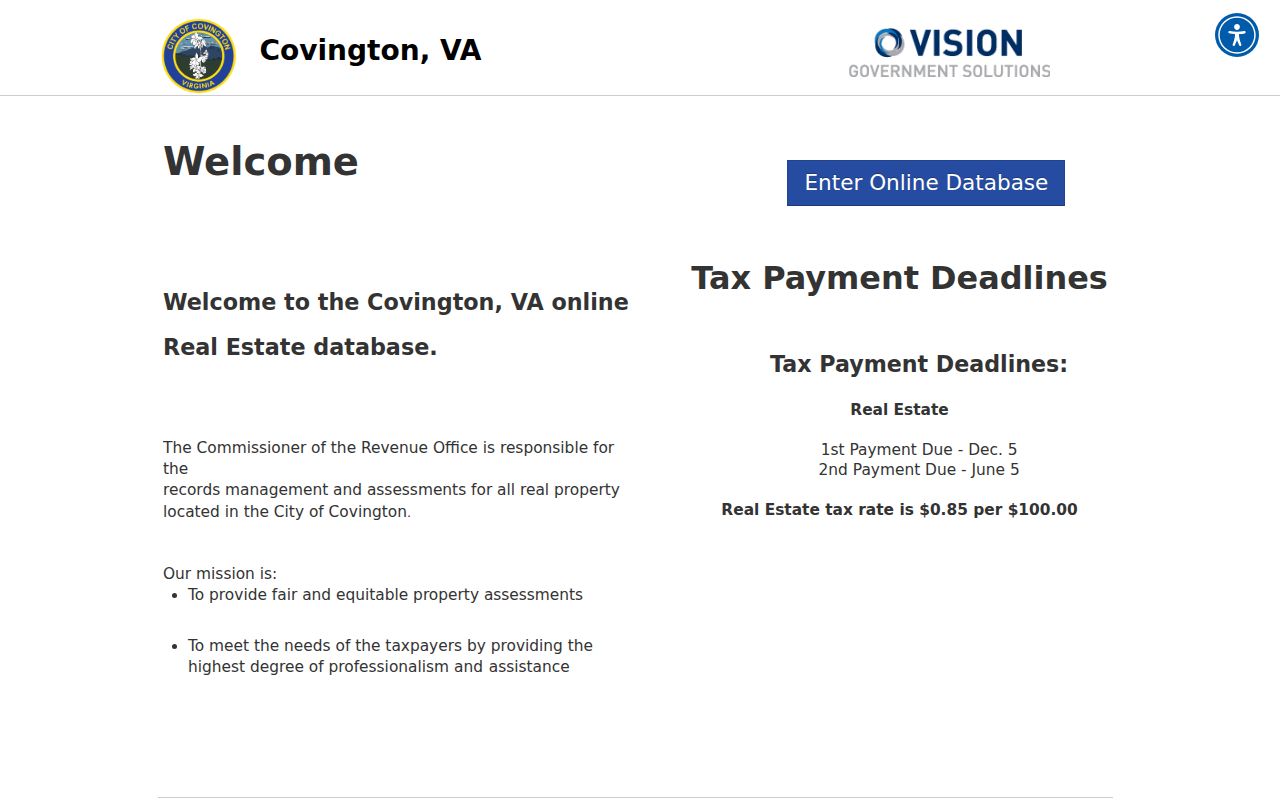
Keep the assessor result with the parcel description. Matching it against the recorded deed and tax account keeps the owner of record straight.
Covington Deeds and the SRA Index
Virginia Secure Remote Access, or SRA, is the statewide route. It reaches participating circuit clerk land indexes. The Alleghany Circuit Clerk is the local recorder for Covington. Deeds, deeds of trust, releases, judgments, liens, and plats pass through that one office. Wills do too. The clerk publishes no Covington-specific starting year for the online index. Search by party name and document reference. Contact the clerk if an index entry lacks an image or misses a needed date.
Virginia separates index access from images. Index-only access can be free when the clerk enables it. Images are another matter. Authorization, an agreement, and fees come first. The local fee schedule is not published online. An index result is a pointer, not proof that every interest has been found. For a title question, match the instrument to the parcel's legal description. Ask a qualified title professional to review the chain of title.
The Virginia SRA access explanation lays out the difference between an index and subscribed images. A free name search comes first. The deed itself is a separate step.
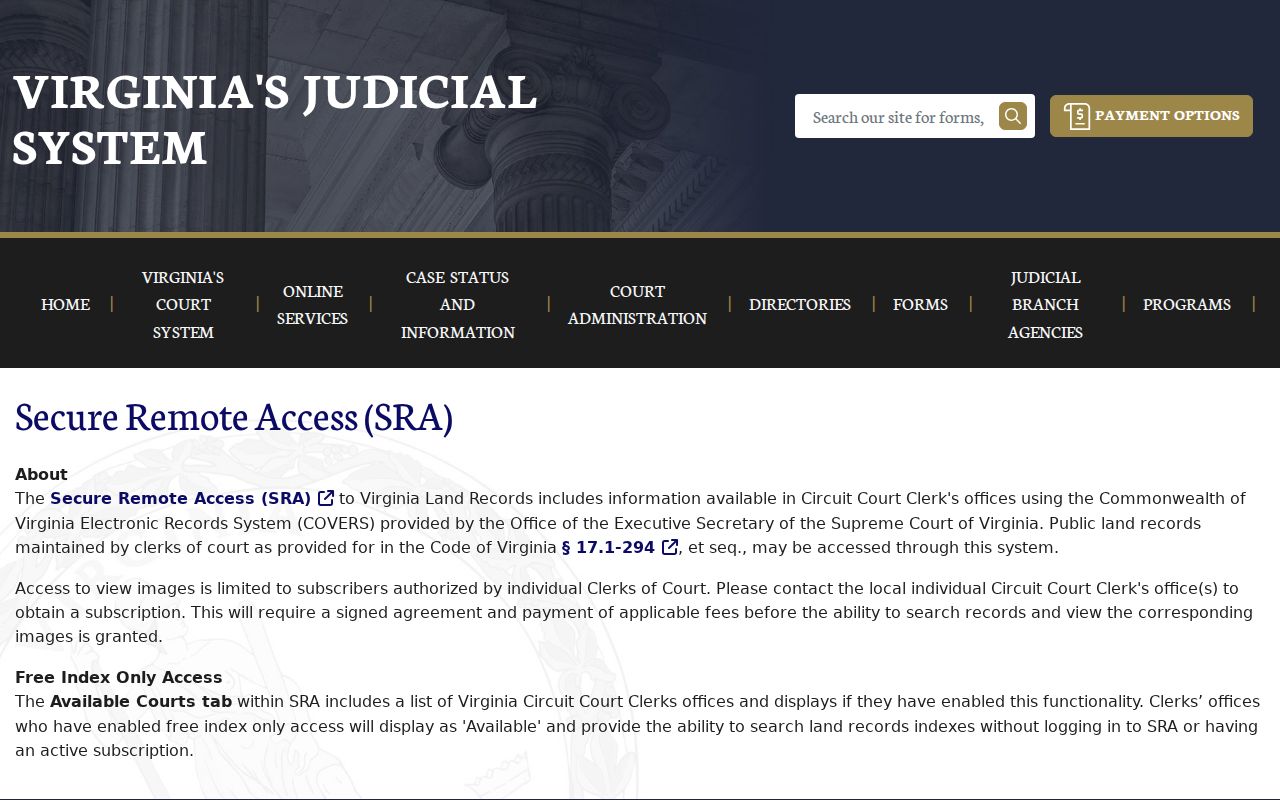
Treat the index as a lead. Check image access with the Alleghany clerk before relying on a transfer detail.
Covington City Tax Dates and Rate
Covington splits its tax work between two offices. The Commissioner of the Revenue keeps the real-estate assessment. The Treasurer keeps the billing account. That office's Citizen Self Service system shows payments as they post. The published Covington schedule lists a real-estate rate of $0.85 per $100 of value. Payment dates fall on June 5 and December 5. Rely on the City's current notice for the bill year. Never carry an old date forward.
In 2026 the City said real-estate and personal-property bills were mailed. They carried a June 5 due date. A posted notice flagged software that could display the wrong real-estate deadline. It sent owners with questions to the Treasurer or the Commissioner. The bill itself beats a copied date on a third-party page. Card payments online carry a 3% convenience fee. You can also pay in person, by mail, or at the drop box. The Treasurer's payment page lists the payment channels and the card fee. That helps separate a tax bill from an assessment record.
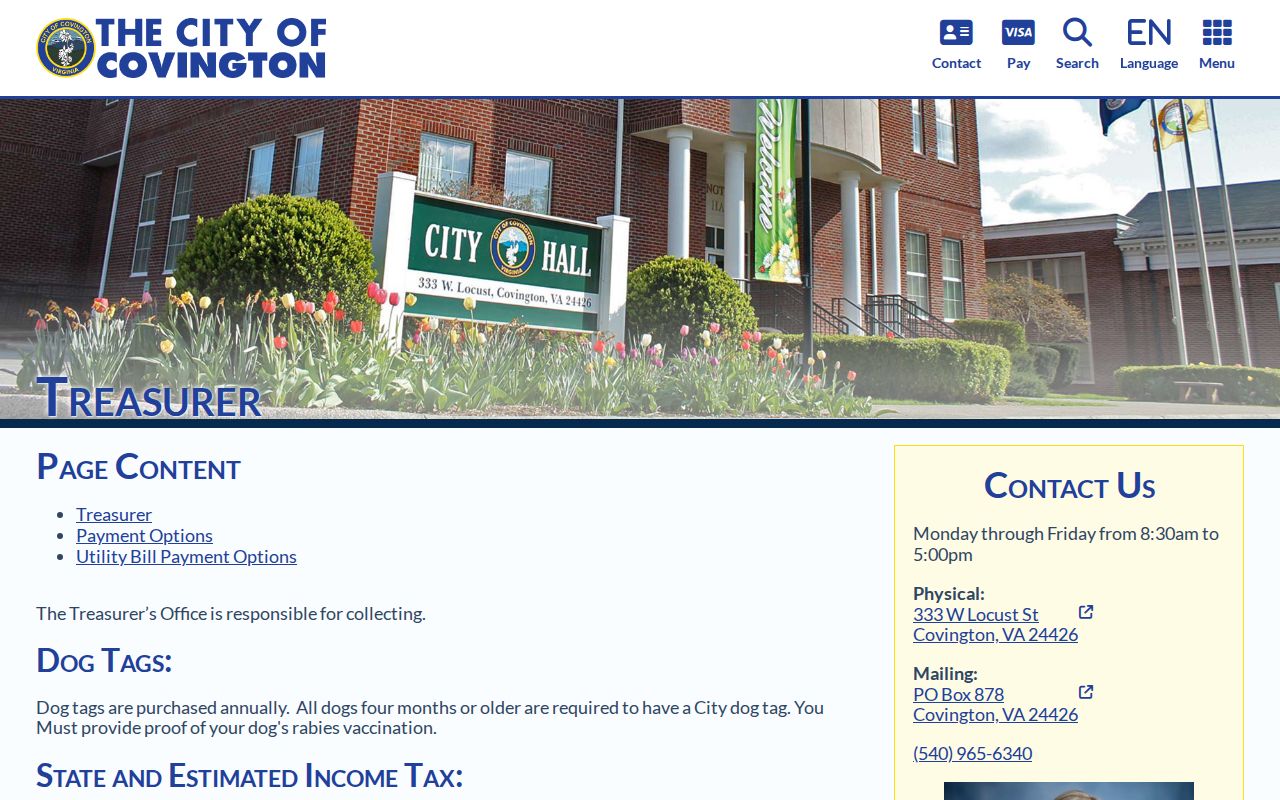
Compare Citizen Self Service with the Treasurer's current instructions.
Permits at 340 East Walnut
Development Services is the city-side source for building, rezoning, land-disturbance, stormwater, sign, open-burning, floodplain, and code matters. The office is at 340 E. Walnut Street, Covington, VA 24426, and lists (540) 965-6356, Monday through Friday from 8:30 a.m. to 5 p.m. Its web page says permit applications are being updated. Building and rezoning applications are downloadable; staff provides several other forms by email.
The City page is not an address-keyed permit-status database. Its contact form asks for name, email, phone, and inquiry; it does not search a parcel or return an inspection history. For a property file, give staff the situs address, parcel identifier if known, and permit type. Applications may be sent by email, fax, mail, or dropped off at the Walnut Street office. The statewide Permit Transparency system can help with participating state-issued applications, but it does not replace city building or zoning records.
Use the Covington Development Services page to see current forms and submission routes. The captured page is an office contact, not a permit search screen.
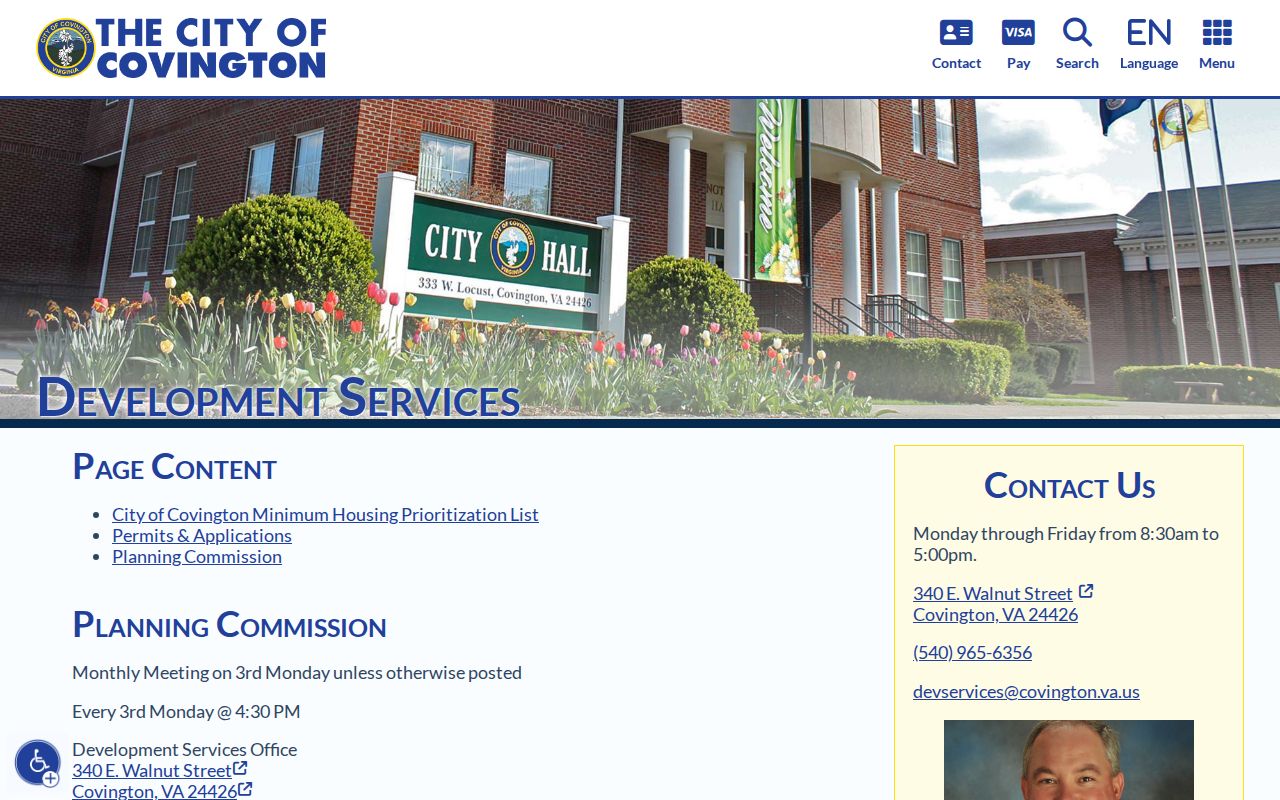
The online page stops at forms and contacts. For a file or a status on a specific Covington address, ask the City directly with the details that matter. Contractor credentials are a separate question. The Virginia Department of Professional and Occupational Regulation runs a state license lookup for regulated professionals.
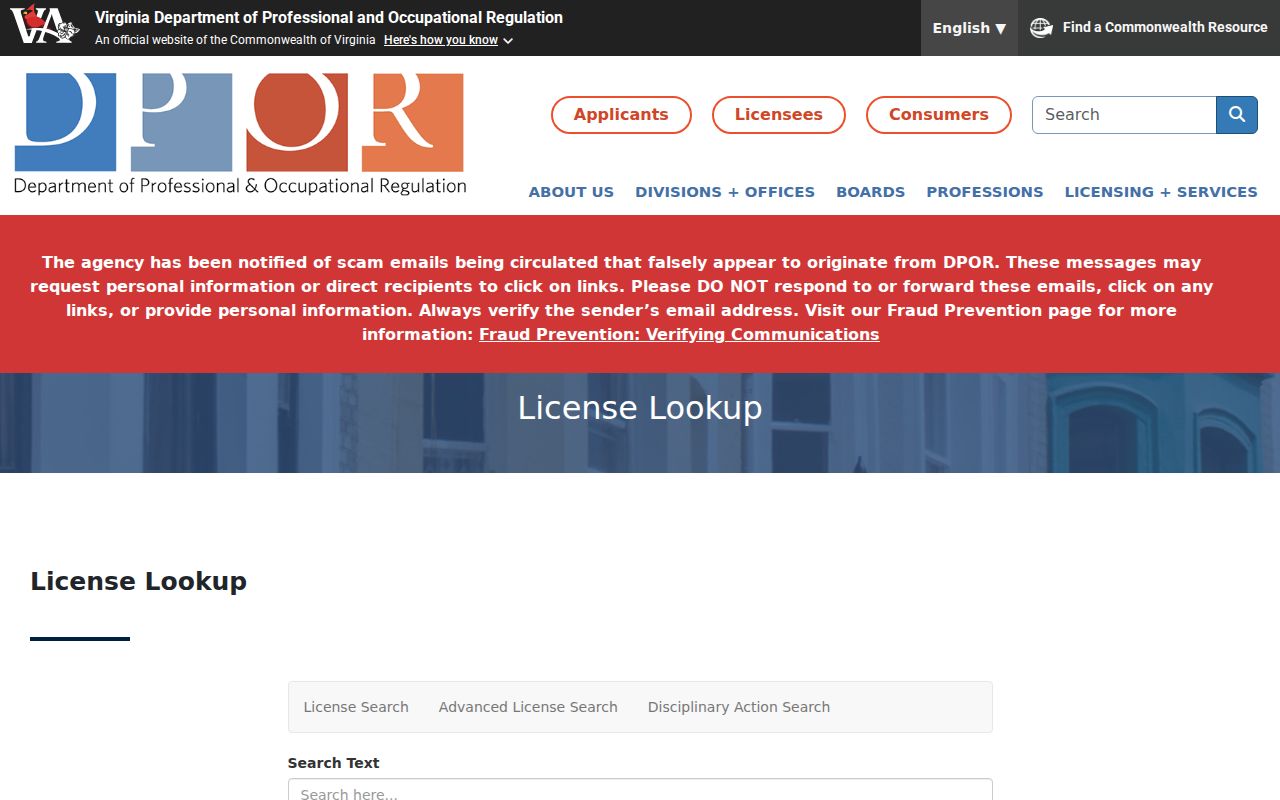
A state license entry verifies a credential. It does not show that work at a Covington address had a City permit or passed inspection.
Covington City Property Record Types
Covington City records answer four different questions: title, assessment, bills, and work on a site. The source matters as much as the term. The City's assessor roll is not Alleghany County's. Recorded land instruments are indexed through the Alleghany Circuit Clerk's system instead. A parcel number helps connect them.
| Record Type | What It Documents | Kept By | Access |
|---|---|---|---|
| Deeds and releases | Transfers, deeds of trust, satisfactions, and recorded liens | Alleghany Circuit Clerk | SRA index where enabled; images by subscription or clerk |
| Assessment roll | Owner and real-estate assessment information | Covington Commissioner | Vision database, counter, or phone |
| Tax bills | Amount due and payment account | Covington Treasurer | Citizen Self Service, in person, mail, or drop box |
| Plats | Recorded lot layout, easements, and dedications | Alleghany Circuit Clerk | SRA or clerk office; local image access varies |
| Permits and zoning | Applications and city development files | Covington Development Services | Email, fax, mail, or drop-off |
Use the deed index to verify a transfer. Use the assessment roll to see the City's value record. Use the Treasurer for a balance or payment. A tax bill does not prove title. A deed image does not show the full current tax account. The separate pages trace those two record trails in detail. Start with the Covington City deed records and property tax records pages.
Covington's 1818 Grid and Early Records
Covington began in 1818 as a 25-acre tract along the Jackson River. The town had 43 houses by 1855. Alleghany County formed on January 5, 1822, from pieces of Botetourt, Bath, and Monroe. One cited reason was distance. A deed meant a two-day horse trip to Fincastle. That burden pushed local administration, and it explains why Covington's history and its courthouse records stay intertwined even though the City is independent.
House-history searches need patience here. Early records rarely match a modern street address. The first clue may be an original grid lot, a later lot-and-block description, or a string of successive grantors. The 1818 grid survives, as does the 1910 courthouse. Later industrial growth adds another layer. Each of those eras can be tested against the description in a deed. Context helps, but it never replaces the legal description in the instrument.
Covington Boundary Orders and Parcels
Covington's legal boundaries rest on old court orders. The charter points to boundary and annexation decrees in Alleghany Common Law Order Book 17, page 491 and following, and Order Book 27, page 495 and following. A correction appears in Order Book 32, page 485 and following. It also records 1951 annexation proceedings and 1991 boundary relocation proceedings corrected in 1995. Those citations are the archival trail.
A modern parcel map cannot explain that history alone. Compare the current assessment locality with the deed index before assuming where a parcel sits. Ask the clerk for the cited order or plat. A tax map line is a reference line only. A licensed surveyor, not the tax map, settles a disputed boundary on the ground. The Covington charter holds those book references.
Covington House History at the Library
The Alleghany Highlands Regional Library at 406 W. Riverside Street serves Covington and Alleghany County. Its local-history room holds real depth. Among the material are a 1924 Covington City Directory, obituary files from the Covington Virginian and Virginian Review, school annuals, photographs, WPA family histories, and funeral-home volumes. A directory can tie a street address to a household or point toward a likely heir. One caution applies. A directory may name a renter, not the owner. Treat it as a lead, and confirm ownership in the tax roll or the deed index.
The Library of Virginia Covington finding aid lists locality-specific microfilm as well. It points to Richmond or interlibrary loan. How far the city directory runs past 1924 is not stated. Neither is the local deed-book year range. So ask the regional library for the named collection. A specific request beats a generic genealogy question. Staff can also advise on copies, scans, and research requests.
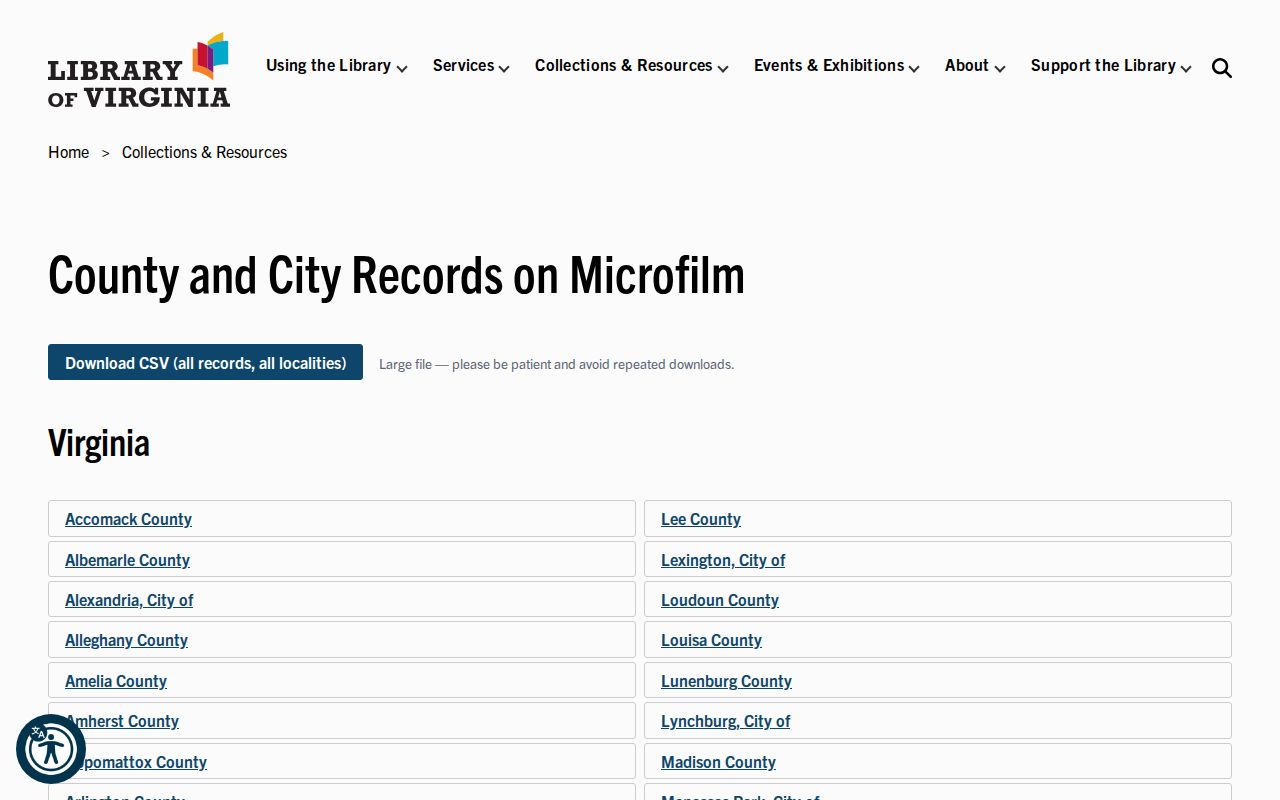
Pick the record series first. Then confirm the exact film and the access method before you travel or order a copy.
Virginia FOIA for Covington Files
Some Covington records never make it online. A city permit file or an archived tax list may sit in a drawer instead. Virginia FOIA opens a request route. The law sits at Va. Code §§ 2.2-3700 et seq., and § 2.2-3704 asks for a reasonably specific request. Name the record, parcel, address, and date range. Point to the office likely to hold it. A public body generally responds within five working days with records, an estimate, a denial, or a request for more detail. The statute allows added time in the circumstances it describes.
Charges cannot exceed actual costs for access, duplication, supplying, or searching, and a deposit can be required when expected charges exceed $200. FOIA does not override exemptions or privacy laws. Send a building file request to Development Services. Assessment questions go to the Commissioner, and court or land records go to the clerk. A narrow request routes faster than a demand for every record about an address.
Limits of Covington City Property Records
Every record has a date and a purpose. An assessment roll names an owner and a value. A recorded deed shows a transfer, a Covington tax bill shows a balance, and a permit file shows an application. None of it stands still. A grantee named today may convey the parcel tomorrow, and an assessment can trail a new deed by months. A directory may name an occupant rather than the owner, and no single source replaces a title opinion, an inspection report, a boundary survey, or a market appraisal.
Lawful use. Use Covington City property records for ownership research, civic review, and property diligence. Do not use owner information to stalk, harass, or harm anyone; a title professional or licensed surveyor must answer title and boundary questions.