
Trace Former Covington City Owners
Tracing former owners in Covington City means walking the deed chain backward through the Alleghany Circuit Clerk's grantor-grantee index. Start with the current grantee. Each deed names the prior party. Its legal description ties the transfer to the parcel, keeping the chain anchored to one property. The online index start year is not published, and the exact deed-book and plat-book runs are not confirmed either, so the table separates firm leads from the years that still require a clerk or catalog check. A parcel number helps keep every step straight.
| Source | Years It Covers | Where Held | What It Shows |
|---|---|---|---|
| Virginia SRA deed index | Local cutoff not located | Alleghany Circuit Clerk / SRA | Grantors, grantees, and instrument references where enabled. |
| Deed books and microfilm | Covington year runs need clerk/catalog check | Clerk and Library of Virginia | Earlier conveyances and legal descriptions. |
| Boundary order books | Specific pages cited by the charter | Alleghany Common Law Order Books 17, 27, 32 | Annexation and boundary clues. |
| 1924 City Directory | 1924 edition identified | Alleghany Highlands Regional Library | Address and household leads; not proof of title. |
Online indexes cover recent transfers. For earlier volumes, ask the clerk directly. The directory and obituary collection can sharpen a name or address lead, but confirm it in the land records before trusting it. The Library of Virginia's locality guide covers Covington microfilm. It does not publish a complete deed-year table.
Covington's Older Deed Books
Virginia's SRA draws land-record information from clerk offices through COVERS. The Covington online cutoff is not published. An empty result proves little. The deed may sit in an unindexed volume. Ask the Alleghany clerk which deed books, microfilm, or counter indexes cover the period you need. The office sits at 266 W. Main Street in Covington. Its land-record number is (540) 965-1730.
The Library of Virginia's locality guide notes that records can stay with a parent locality when a new city or county forms. Film access may run through Richmond or interlibrary loan. Write down the film title and reel or book number before arranging access. The Library of Virginia Covington locality guide is the starting point for microfilm holdings.
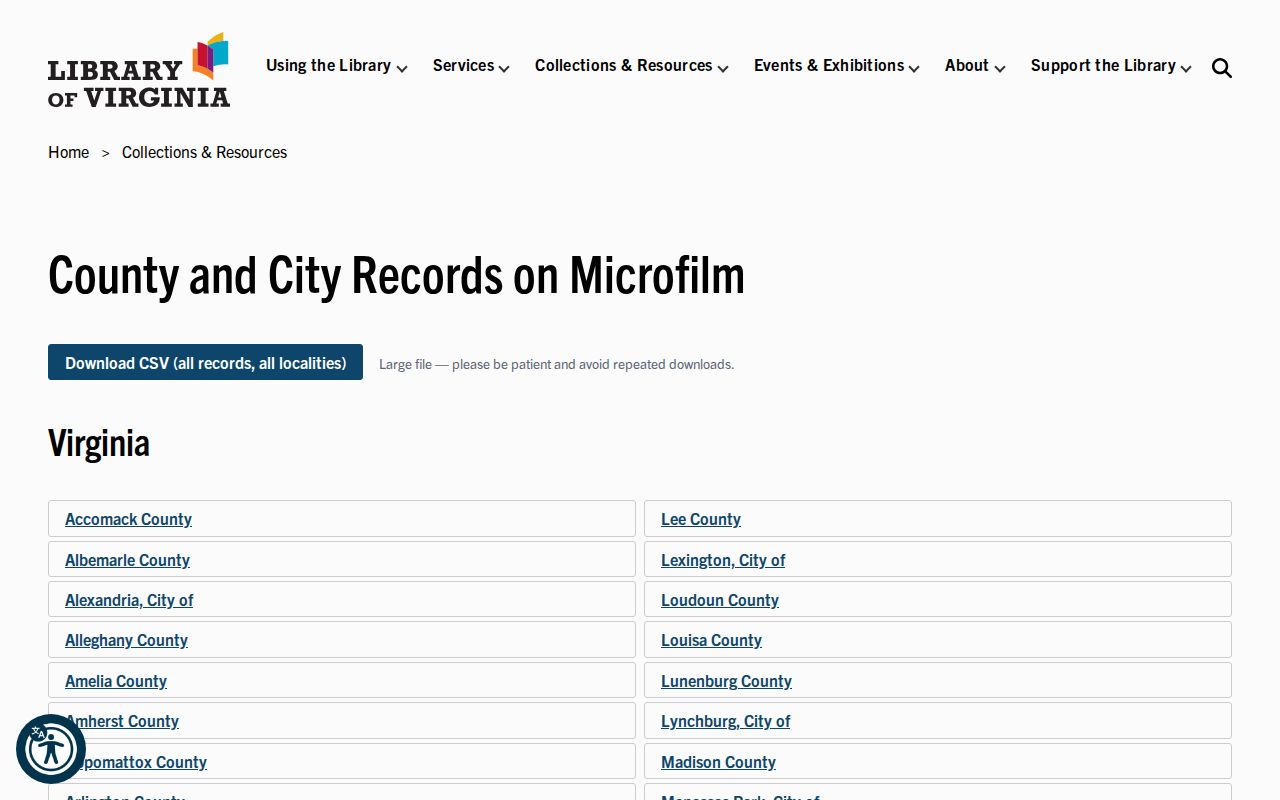
Use the catalog to spot a promising series. Then confirm its actual dates and access route with the library or the clerk.
Walk Back Covington's Deed Chain
A chain of title comes back together one instrument at a time. Start with the current owner as grantee. Read the grantor who conveyed the property. Search that prior party as a new grantee. Step back again only when the legal description still matches, and remember this is a walk through transfers, not a name sweep of everyone who ever lived on the street.
- Find the present grantee's acquisition deed and copy its legal description.
- Read the grantor and search that name as the next grantee.
- Check the date, parties, and land description against the prior deed.
- When the online trail stops, ask the clerk for the book or film series that covers the earlier year.
- Grantor
- The party conveying an interest in the deed.
- Grantee
- The party receiving that interest.
- Chain of title
- The linked sequence of recorded transfers for one parcel.
- Legal description
- The land text used to identify the parcel; it can outlast a street name.
The Virginia SRA land-record interface is where party searches begin once the clerk enables access.
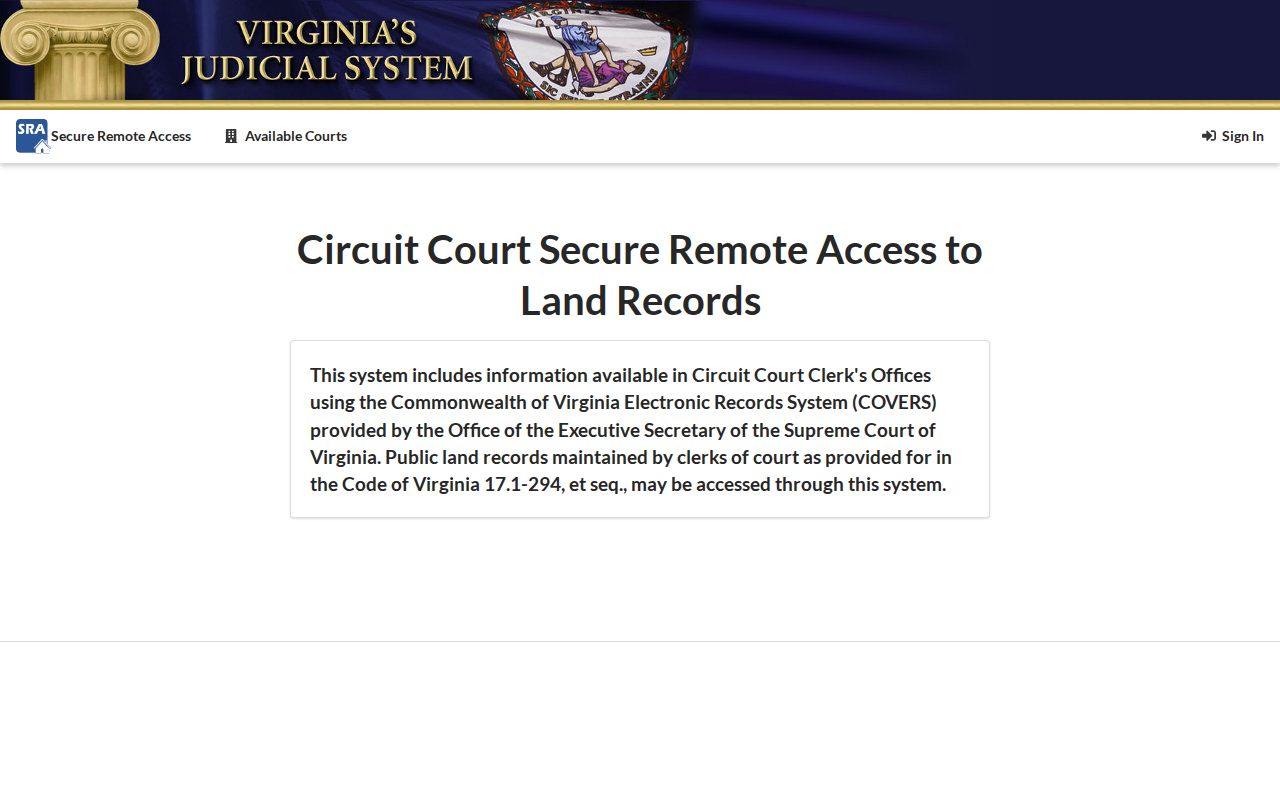
Treat each index hit as a lead. Match its legal description to the prior deed before stepping back again.
Covington's 1818 Lots and 1822 County
Covington was laid out in 1818. Alleghany County followed on January 5, 1822, formed from parts of Botetourt, Bath, and Monroe. Local history credits the push for local administration partly to Fincastle, a two-day horse trip away, which made deed recording distant and slow. Start with the original lot description. Trace the later conveyances from there. Do not expect a modern street number in every deed.
The city grew from a small grid into an industrial and rail center. In 1855, just 43 houses stood on two streets. The historic district's key period runs from about 1890 to 1940. Each era described property differently. These dates set a useful search range, but they do not supply the missing index start year or prove that a given lot had a particular owner.
Covington Boundary Orders in the Chain
Boundaries moved over time. Covington's charter cites Alleghany Common Law Order Book 17, page 491 and following, Book 27, page 495 and following, and a correction in Book 32, page 485 and following. It also notes 1951 annexation proceedings and a 1991 boundary relocation corrected in 1995. Those order-book entries can bridge an old grantor description to a present city parcel. The charter's boundary history and book references give the clerk a specific request. Use the cited page ranges as leads. Then check the related order. Match any plat to the legal description.
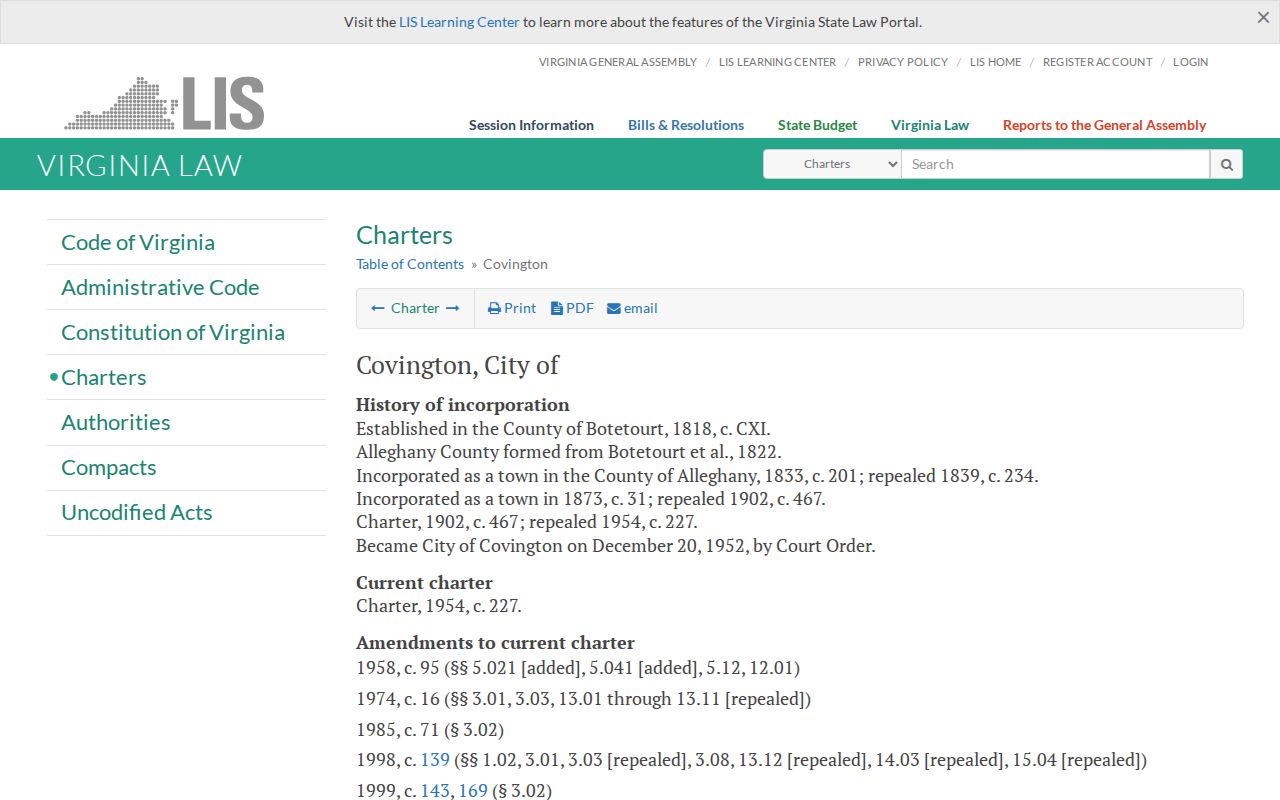
An order can explain a jurisdiction shift. The deed and plat still identify the transfer and shape of the parcel.
Covington Estate and Heir Transfers
Estate transfers reshape a Covington City ownership chain in several ways. An executor's, administrator's, or fiduciary deed can pass title, as can a partition suit or judicial sale. When a name suggests an estate, search the Alleghany clerk's land and will indexes side by side. The assessment roll may keep a decedent's name until a later instrument is recorded, and the clerk can pull counter files and quote copy costs.
Virginia death records carry confidentiality periods. Public death indexes open after 25 years. Birth records open after 100 years, under Va. Code § 32.1-271. A public index is not a certified certificate. Eligibility governs the certified copy. Build the name with an obituary or city directory. Then verify the heir or representative through probate and deed records. The Virginia vital-records genealogy page explains the timing of each public index.
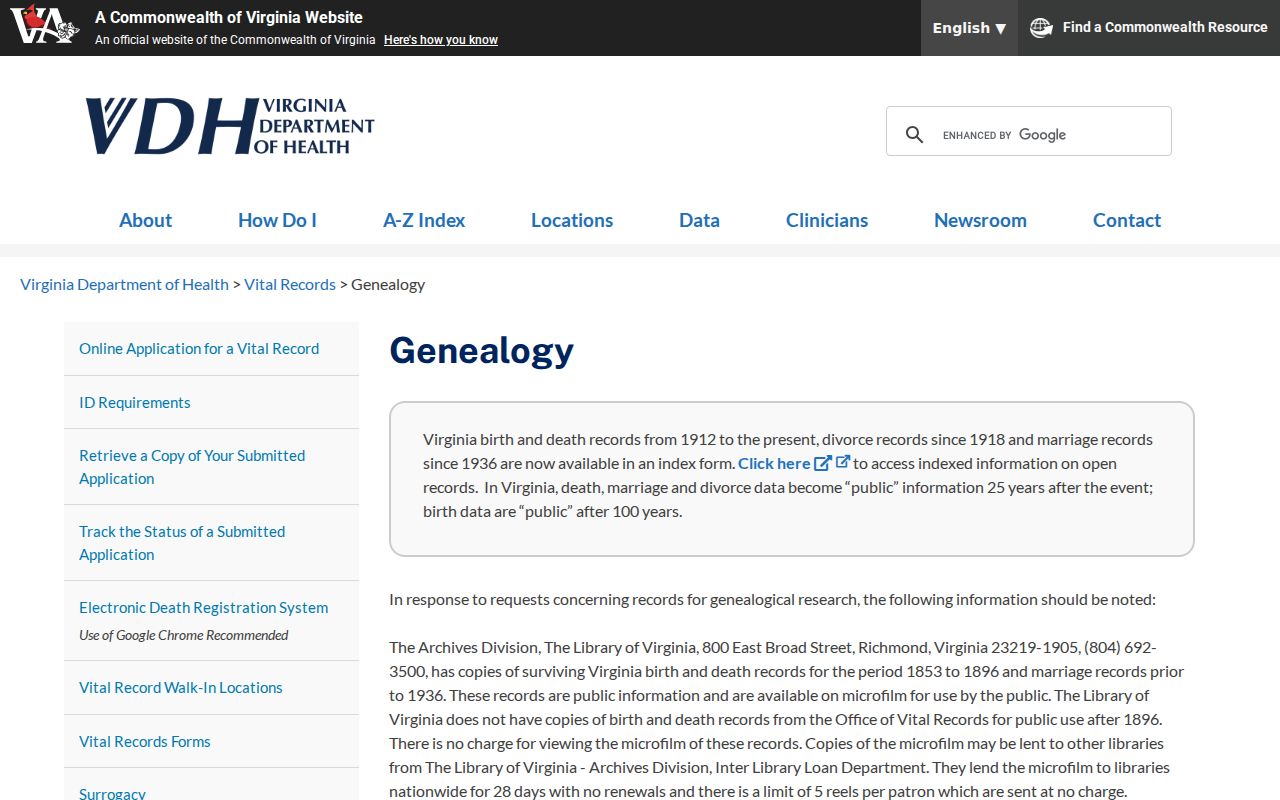
Use an index as a lead; probate and recorded conveyances establish the property transfer.
Covington's 1924 Directory Clue
The Alleghany Highlands Regional Library holds a strong local-history room. Its collection includes a 1924 Covington City Directory. Obituary files from the Covington Virginian and Virginian Review sit alongside them. So do photographs, school annuals, WPA family histories, and funeral-home volumes. A directory ties a past household to an address. It can also separate an owner from a renter. Read the original abbreviation key instead of expanding a mark by guesswork. Follow the address across years. Then confirm the owner in tax or deed records.
Licensing for other newspaper and genealogy databases varies. Ask staff about the specific directory and obituary files. The Library of Virginia's microfilm collection and Chancery Records Index serve as statewide fallbacks when a land chain intersects a court dispute. The Alleghany Highlands Regional Library is the local archive contact.
How Far Covington Ownership Records Reach
Covington's online index has no documented start year. No source lists an oldest surviving deed book or a digitization cutoff. Treat a stopping point as an access gap, then, not a historical endpoint. Ask the circuit clerk about the older land books. The Library of Virginia's locality guide points to microfilm. No courthouse fire or lost-book list complicates the picture.
Covington's old street grid and the 1822 county formation give useful context, and order-book references point to boundary changes. Neither replaces an instrument-by-instrument chain. The Covington City deed records page covers copy access and index mechanics, and the present-owner record remains a separate check.
Lawful use. Use former-owner research for house history, title work, and parcel diligence. Do not use old names or addresses to track, stalk, or harass a living person.