
Find Who Owns a Covington City Property
Begin with an address. Search the Covington City assessment roll, then verify the name against the newest recorded deed. The Commissioner of the Revenue offers a Vision database. It includes property search, owner search, and ownership history tools. Vision's statewide locality directory says the data refreshes nightly. No source publishes the lag between a closing and the roll. For the deed itself, the Alleghany Circuit Clerk's grantor-grantee index is the record trail.
This tells you who appears in the public record. It cannot prove who occupies a building. It cannot prove whether title is clear, or who controls a trust or company. Keep the parcel description beside the name. That habit keeps a same-name result from being mistaken for the Covington parcel.
- Search the Covington address in the Vision assessor database and copy the parcel details shown.
- Search the displayed owner as grantee in Virginia SRA and match the deed's legal description.
- Check the latest instrument and any later conveyance or release at the clerk.
- If the grantee is an entity, use the Virginia SCC record as a lead, not proof of parcel ownership.
Confirm a Covington City Owner by Deed
The assessment roll is a starting point. The recorded deed is the instrument that actually moved title. The Alleghany Circuit Clerk runs the shared courthouse land-record system that covers Covington. Search the owner name as grantee to find the acquisition. Then read the grantor and the legal description.
If the deed is newer than the assessment entry, ask the Commissioner whether the roll has caught up. No source publishes a typical delay, so assume no fixed number of days. Virginia SRA can offer a free index where a locality enables it. Document images require local clerk authorization, an agreement, and fees.
When the online trail stops at an index entry, call the clerk at (540) 965-1730 or visit the courthouse at 266 W. Main Street. The clerk's local image fee schedule is not published online. The Virginia SRA grantor-grantee search is the entry point. It is the way to search the owner name in the recorded deeds.
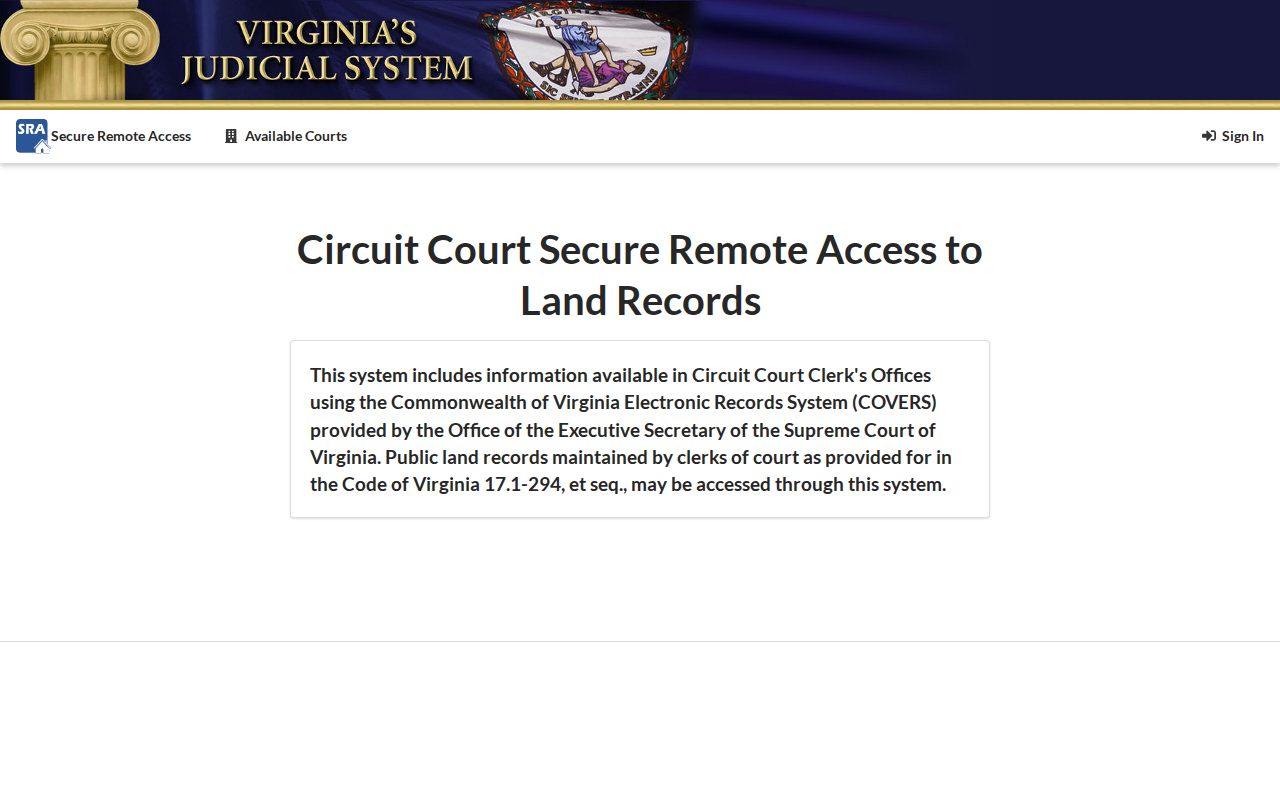
Before treating any name as the owner of the Covington property, match the result to the parcel's legal description. That single check prevents most wrong-owner conclusions.
Covington City Owner Record Sources
Ownership facts in Covington City live in records with different jobs. The Vision roll is the public assessment source. The land index identifies recorded transfers. SCC filings explain the names behind an entity. No parcel map is published, so do not assume a GIS owner layer exists. Each source still needs a parcel-level match.
| Source | Owner Info It Gives | Access |
|---|---|---|
| Vision assessment roll | Owner and property data advertised by the Commissioner | Public database; exact card fields need live confirmation. |
| Virginia SRA index | Grantor and grantee names tied to recorded instruments | Index access depends on clerk settings; images require authorization. |
| Virginia SCC CIS | Entity status, agent, principal office, and filings | Entity lead only; it does not establish land title. |
| City Treasurer | Billing account and payment information | Citizen Self Service or direct contact. |
A record owner and a building occupant are different facts. A mailing address may sit outside Covington. A business address may point to an agent. The agent may not be the person who owns the parcel. The City publishes no complete parcel GIS layer. Rely on the assessment entry for the parcel and the deed for the transfer.
A deed may name a trustee, executor, administrator, or company officer. Keep the capacity exactly as recorded. The role explains why a personal name sits beside an entity. It does not prove beneficial ownership or control. Use an entity filing to understand the name on the instrument. Then return to the land record and legal description. Skip commercial people-search profiles.
Covington LLC, Trust, and Estate Names
A Covington grantee may be an entity rather than a person. It can be a limited-liability company, trust, estate, or fiduciary. Search the deed under the exact entity name. Then use the Virginia SCC Clerk's Information System. It checks entity status, registered agent, principal office, filings, and UCC records. A registered agent receives legal notices. That role alone does not show who owns the land or controls the entity.
For an estate transfer, search the land-record index. Also search the circuit clerk's will and fiduciary indexes. The assessor may keep showing a decedent or estate name until a conveyance is processed. Covington publishes no probate portal, local transfer-on-death practice, or probate fee schedule. Ask the clerk which record series holds the estate file. The Virginia SCC CIS is the official entity search.
Let the SCC filing explain the name on the deed. Then return to the Alleghany land record to confirm the parcel transfer itself.
Covington Situs and Owner Mailing Address
A situs address tells you where the land sits. The mailing address tells you where the tax bill goes. Those two can differ. The owner of record may live elsewhere. Title may be held as an entity or an estate. Copy both exactly as the Vision result shows them. Never read a mailing address as a residence. Never read it as proof of who owns the parcel. For any property matter, write to the public mailing address. Keep the message lawful and respectful.
Older Covington deeds can describe land without any modern address at all. The 1818 grid shaped the city. The industrial growth that followed means one site may carry different descriptions across the years. Match the current parcel to the deed's lot, block, or calls before drawing conclusions. Do not use a ZIP code to decide whether a parcel lies inside city limits. The city shares its complete ZIP geography. No separate map settles the question.
Covington's Nightly Roll Update
Vision's statewide directory flags Covington as updated nightly. That label describes the vendor feed. It does not promise a deed recorded today shows a new owner of record tomorrow. No closing-to-roll schedule or guaranteed processing interval exists. So when a recent sale matters, set the recorded deed's date beside the assessment record and ask the Commissioner whether the ownership field is current.
Hold onto the deed's recording reference and the assessment tax year. For the transaction date, the recorded instrument beats the roll. The roll still gives useful assessment and billing context. An older owner name alone does not signal a failed transfer. A processing lag may explain it. So may a representative-capacity deed or simple differences in how the parties spelled their names.
The Vision database landing page links the assessor search for Covington property.
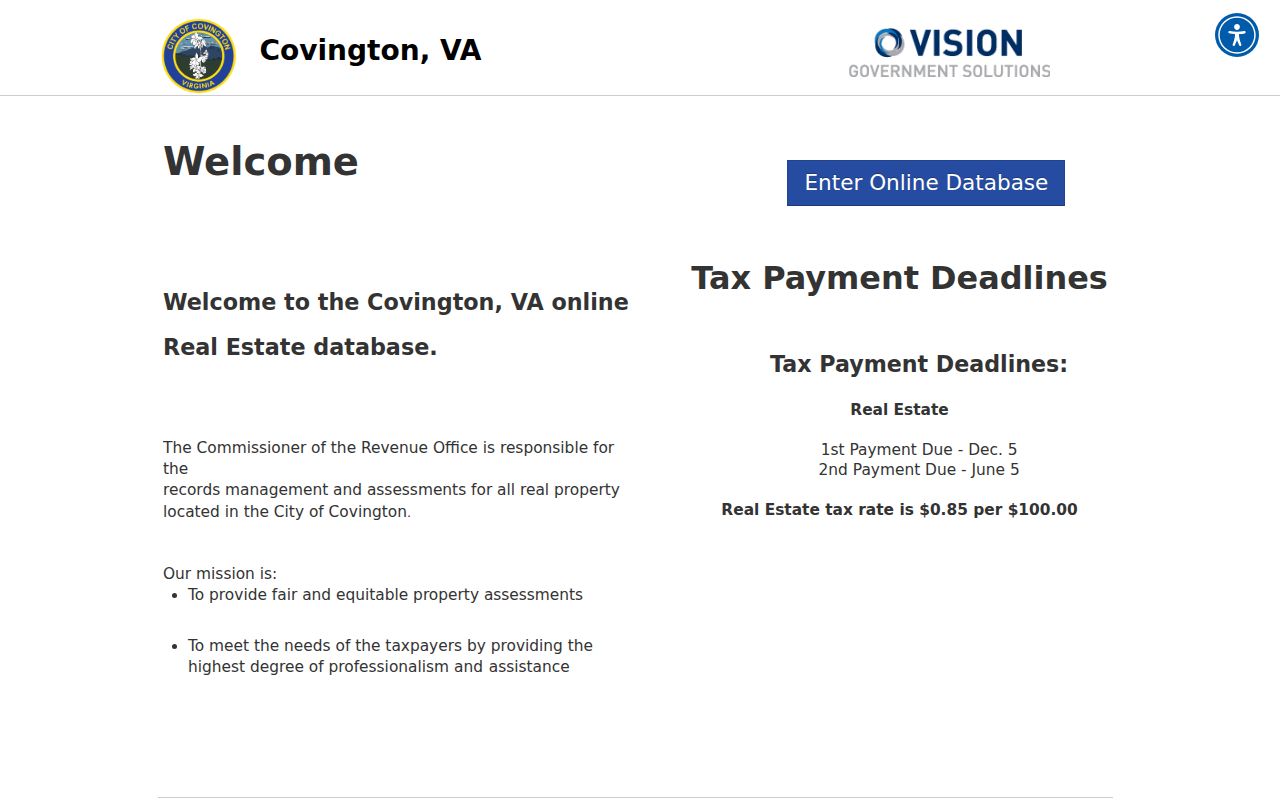
The nightly label is a starting point, not a verdict. Check the live owner field against the deed itself before calling a transfer complete.
Covington Deed Alert and Privacy
The Alleghany Circuit Court page links to Virginia Deed Alert. It is a statewide service for monitoring recorded instruments. The court page is the place to confirm current signup steps. The service makes no promise that every filing triggers an alert. Treat an alert as a prompt. It does not replace the deed image or a question to the clerk.
Virginia's Address Confidentiality Program gives eligible survivors a designated mailing address. Forwarding goes through the Attorney General. It is a safety tool. It cannot erase a valid deed or assessment. The voter portal has its own lookup inputs and access restrictions. Never use voter data to infer parcel ownership. Respect protected addresses and contact boundaries whenever researching an owner.
Limits of a Covington City Owner Lookup
A Covington City owner lookup finds names in public records. It does not find the person standing inside a building. It cannot tell you whether a deed is free of all claims. It cannot say whether a lien was paid. It cannot show whether a company agent is the beneficial owner. Virginia FOIA and recording laws sit alongside confidentiality rules. The Address Confidentiality Program shields eligible participants behind a designated address. Use these records for property diligence, history, and civic work.
Lawful use. Use public owner information for a clear property purpose. Do not stalk, harass, threaten, or expose a protected person; a name and address are not permission to intrude.