
Covington City Property Value Types
Covington City property values take three common forms. An assessment is the figure the city places on a parcel for taxation. A sale amount is what a deed recorded for one transaction. An appraisal is a professional opinion of what a property would bring today. Virginia law requires local assessment at 100% of fair market value. Yet the assessor's roll still serves a tax purpose and is not a market appraisal for a current sale. The Vision landing page links to the City database. So confirm the exact fields on the live parcel card rather than assuming what it displays.
| Value | What It Is | Where |
|---|---|---|
| Assessed value | Tax value carried on the local assessment roll. | Covington Commissioner / Vision. |
| Market value | Price a willing buyer might pay under current conditions. | Requires a market analysis or appraisal; not established by the tax roll. |
| Last sale amount | Price or consideration tied to a recorded transfer if shown. | Deed or another transaction record; exact local field is unconfirmed. |
| Appraisal | Professional opinion for a stated purpose and date. | Licensed appraiser, not the assessment card. |
Covington assesses at full fair market value under the statutory standard. But a tax assessment and a real purchase price can still part ways. Date, condition, and valuation method all create gaps between the two figures. A last sale is one transaction frozen at one time. It is not a current price estimate. The land and improvement breakdown on the Covington parcel card should be checked in the live result. A value split may or may not appear.
Virginia's Covington Assessment Rule
Virginia's real-property tax law sets assessment at 100% of fair market value. That standard describes the assessment level. It is not a promise about sale price. Not every parcel will sell for the number on its assessment card. The Commissioner of Revenue maintains the City tax roll. The Commissioner can explain the tax year and the record behind any parcel. The city publishes no Covington revaluation calendar or local ratio study. Ask the Commissioner directly about reassessment timing.
Always keep the assessment year attached to a value. When comparing two parcels, check location, property description, and date. Do that before trusting the numbers side by side. A value shifts as the tax roll is updated. A deed's sale price reflects the terms of one specific transfer. For the assessment framework, consult the official state statute. Raise questions about an individual entry with the Commissioner.
Virginia's real-property assessment law supplies the 100% standard.
Look Up a Covington City Property Value
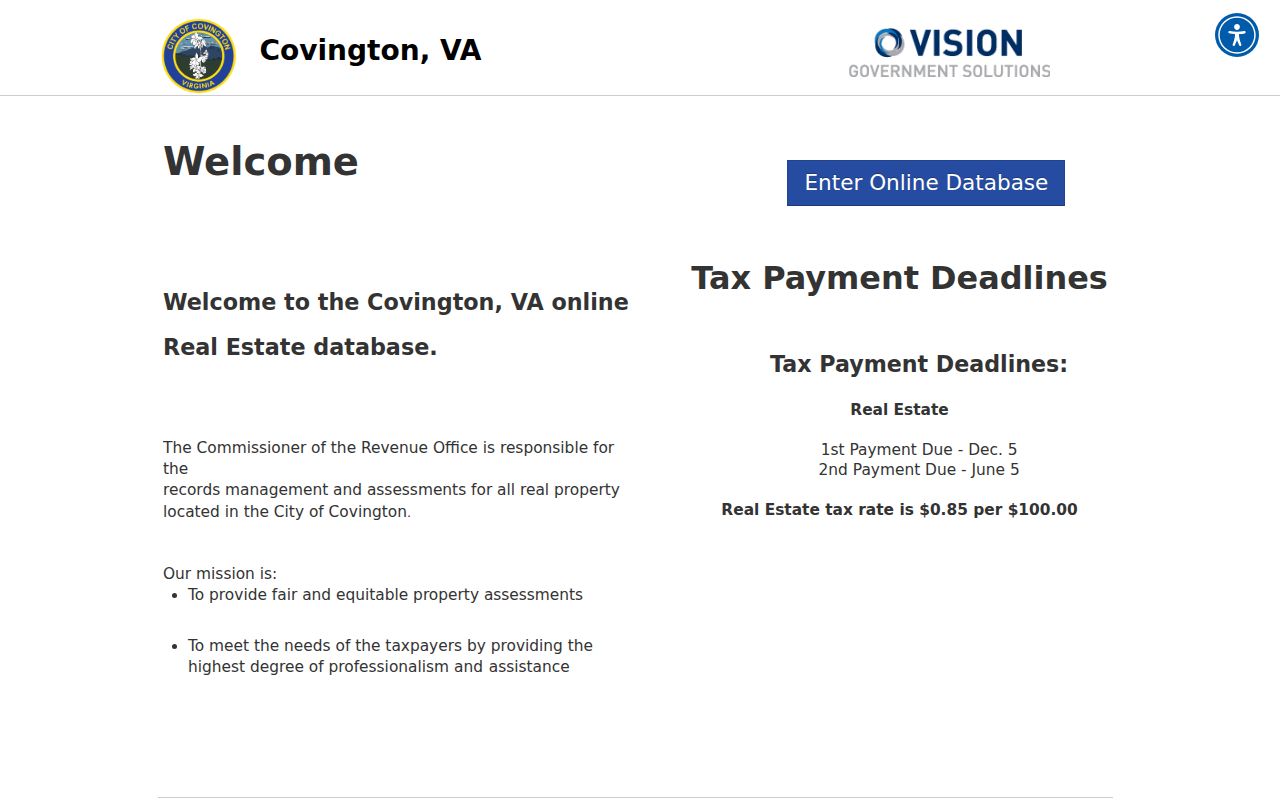
Start with the Covington Vision real-estate database that the Commissioner links to. The database entry point is live, and the city notes it updates nightly. The live card fields should still be checked on an actual record. If the result shows an assessed amount, write down the year. Also note the parcel number and the value label. If it shows a sale date, or a sale amount, treat that as a separate transaction clue. Then verify it against the deed itself.
- Search the Covington situs address or owner name in Vision.
- Copy the displayed assessment amount and the tax year attached to it.
- Check the deed index for a recorded transfer and its date.
- Use a licensed appraisal for a current market opinion or transaction decision.
- Assessed value
- The City roll's tax valuation for the stated year.
- Market value
- A current estimate of likely exchange price under market conditions.
- Consideration
- Value exchanged in a recorded transaction, if the document or index displays it.
- Appraisal
- A professional valuation for a stated date and purpose.
Covington's Value Record Fields
The Covington Vision page advertises the real-estate database and ownership history. But the live card requires first-hand checking. Treat any field list as a verification list. Rather than a guarantee of what the page currently shows. Confirm whether a record labels its figure as land, improvement, total, or assessed value. Keep the tax year attached to whatever number you find.
| Assessment year | Year for which the City roll applies. |
|---|---|
| Assessed amount | Tax valuation under Virginia's assessment rule. |
| Land or improvement split | Record only if the live parcel card displays it. |
| Sale date or amount | Verify against the recorded deed; the local card field is unconfirmed. |
| Exemption or taxable entry | Ask the Commissioner which local relief applies. |
The City's Vision assessor portal is the source for the assessment search.
Before comparing any number to a sale price, verify the label and tax year on the live parcel record.
Covington Sale Price and Deed
A last-sale amount belongs to a particular deed or transfer. Whether Vision displays a sale price field is one thing to confirm in the records themselves. Whether a Covington deed index exposes consideration is another. Search the land record by grantor and grantee. Retrieve the actual instrument when available. Read what it states. An indexed amount, if one appears, may omit terms that shaped the sale.
The Circuit Clerk records deeds through Virginia SRA. Index access and image access are separate steps. The clerk's image fees and online cutoff year are not published. Expect to confirm those details with the office. If a current valuation hinges on a sale figure, rely on comparable market evidence. You could also engage a licensed appraiser. Do not treat an older deed as today's value.
The Virginia SRA land-record index is the route to the recorded transaction.
Covington Rate Is Not Property Value
The Vision page lists a Covington real-estate tax rate of $0.85 per $100. Payments are due June 5 and December 5. A rate is just one input to a tax calculation. It is not a valuation estimate. The amount due comes from the Treasurer's account. It can reflect bill status, timing, or any applicable adjustment. The city's 2026 notice also described a software issue that displayed the correct real-estate due date. So check the current notice before relying on a shown date.
The Treasurer payment page lists card, in-person, mail, and drop-box options. Card payments carry a 3% convenience fee. For the tax-bill and appeal process, see the Covington City property tax records page. Above all, keep the value of a property separate from the bill itself.
Covington City Value Changes
Covington City publishes no fixed revaluation schedule and no parcel-value trend. There is no ratio study that a property owner can lean on either. The nightly update note from Vision describes a database feed, not a reassessment cycle. That distinction matters. Ask the Commissioner which assessment year the record shows. Ask when the next local review applies. A change on the web record can simply reflect a data update. It does not always mean a market actually moved.
Comparisons work best when the parcel, tax year, and record type stay fixed. Small shifts matter. A new owner of record can move the displayed assessment. So can a changed legal description, an exemption entry, or updated property characteristics. A past sale price is not a current value estimate either. For a valuation dispute or a tax-bill question, use the property-tax page. Use the City appeal contact too. Do not treat any comparison as a formal appraisal.
Virginia's equalization statute, Va. Code § 58.1-3380, sets an appeal framework. However, Covington's current hearing calendar and filing form are not published online. Gather the assessment notice, parcel description, tax year, and comparable evidence in one place. Then ask the Commissioner which local review steps and deadline apply. A market comparison is useful context only when the properties and valuation dates are reasonably alike.
Limits of Covington City Value Records
A Covington City assessment is a tax figure, not an offer or appraisal. It helps when comparing assessment years or framing a question for the Commissioner. It cannot say what a buyer will pay. A recorded sale is also date-specific. A licensed appraiser can establish market value for a stated purpose, and the City's tax roll and Treasurer's tax bill cannot replace that work.
Value vs price. Covington's assessed value is set for tax purposes under Virginia law. It is not a current sale price, a market appraisal, or a guarantee of what a property will bring.